
How Formula 1 works: points, two championships and pit stops explained
Two championships at once, points only for the top ten and pit stops that are over in three seconds. F1 looks like chaos but has a very clear logic. We explain it from scratch, jargon-free, so you can follow your next race knowing exactly what is going on.


Written by Andrés Rendón
Founder and host of Somos Motor, September 5, 2026
In three lines: Formula 1 is the top category of motor racing and is decided on points over a season of Grands Prix. Two titles are up for grabs at once, the drivers' and the constructors' (the teams'). In every race the top ten score, and the winner takes 25 points.
Formula 1 is the top category of motor racing: a competition in which the fastest racing cars in the world contest a series of Grands Prix over the year, and whoever has the most points at the end of the season wins. It looks like chaos, cars going round and round, but it has a very clear logic and you can get it in ten minutes. Here is the guide to start from zero and not get lost.
01What is F1, in one sentence?
Formula 1 is the top category of motor racing: the fastest and most advanced racing cars in the world, single-seaters (one seat) built by teams that spend fortunes to win. Elite drivers fight for a championship over a season that circles the globe.
02How is the winner decided? The football analogy
Think of a football league, but with cars. It is not decided in a single race: there are many races (the Grands Prix) spread around the world, each one hands out points, and at the end of the season whoever has the most points is champion. Simple.
03Why are there two championships at once?
This throws people at first: in F1 there are two championships at once.
- The drivers' championship: each driver adds up his own points. Whoever has the most is drivers' world champion.
- The constructors' championship (the teams'): each team has two cars and adds up the points of its two drivers. The team with the most points wins the constructors' championship.
That is why a driver sometimes helps his team-mate: even though they compete, they are also rowing together for the team's title.
04What happens on a Grand Prix weekend?
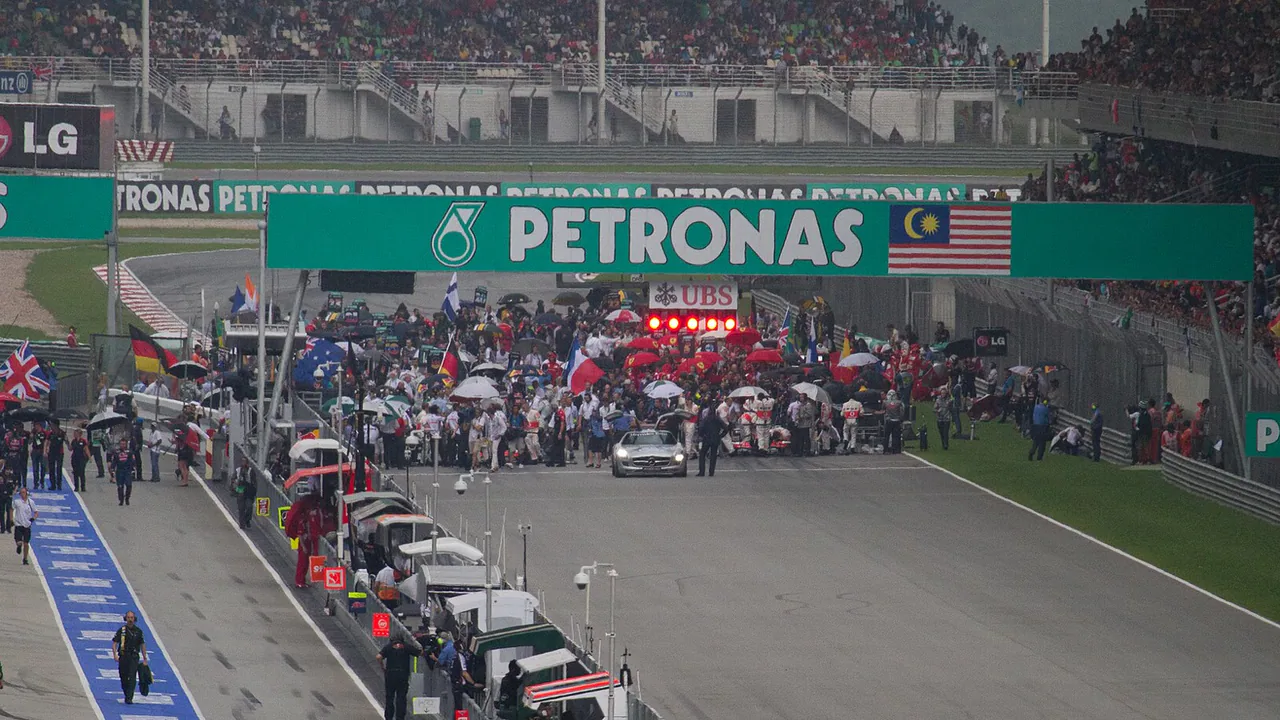
Every Grand Prix lasts three days:
- Friday: free practice. Teams test the car and fine-tune it.
- Saturday: qualifying, which decides the starting order (the grid). The fastest driver starts first, on pole position.
- Sunday: the race, the big one, the one that hands out the important points.
On some weekends there is also a sprint race, a shorter one that changes how the sessions are shared out. According to Formula 1, it lasts about 100 km (around a third of a Grand Prix and some 30 minutes) and awards points to the top eight: 8 for the winner and then 7, 6, 5, 4, 3, 2 and 1. In 2026 there are six sprint weekends; in 2027 there will be ten.
05How are points won?
In the Sunday race the top 10 score: the winner takes 25 points, then 18, 15, 12, 10, 8, 6, 4, 2 and 1 for tenth place. Whoever has the most points at the end of the season is champion.
06Why do pit stops decide races?
During the race, cars come into the pits (their garage) to change tyres in stops lasting a few seconds. This is where races are won and lost:
- The rules force drivers to use different types of tyre during the race, so stopping is compulsory.
- Choosing when to stop is pure strategy: stopping earlier or later than your rival can get you past him without touching him, simply by having fresher tyres at just the right moment.
- A top team's pit stop takes barely two or three seconds, with more than fifteen people changing all four wheels at once. It is one of the most spectacular things to watch.
07Why do tyres matter so much: soft, medium and hard?
As in MotoGP, rubber rules. There are soft compounds (more grip but they wear out sooner), medium and hard ones (they last longer but grip less). Managing your tyres well during the race is half the battle won.
08What changes in F1 from 2026?
If you are getting hooked now, you are arriving just in time for the biggest rule change in years, which is already under way this 2026 season. According to Formula 1's official guide, it has four parts:
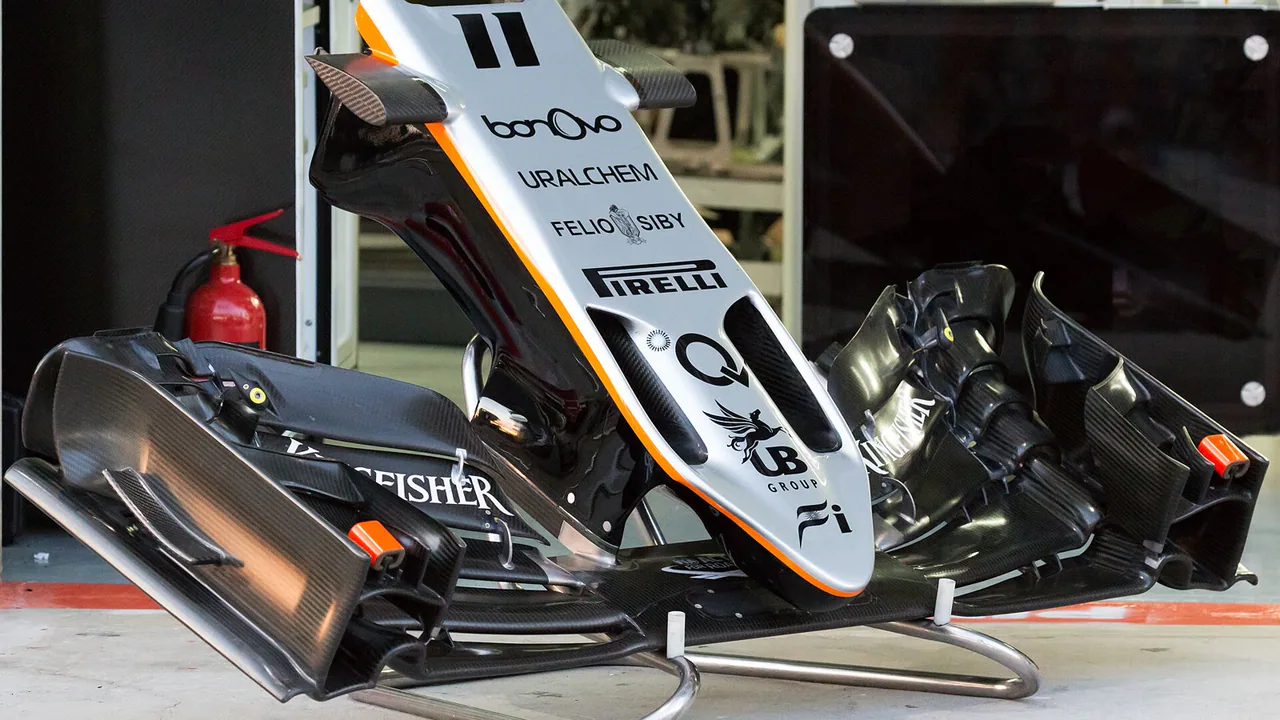
- Active aerodynamics. The front and rear wings have moving elements, like the slats of a blind. The wings have two fixed positions. The default is Corner Mode: wings closed, more grip. The other is Straight Mode: wings open, less drag and more top speed. According to the FIA technical regulations (Section C, issue 20 of 5 August 2026), Straight Mode can only be active when the car is inside an activation zone set by the FIA; the driver requests it with a direct action, the FIA's standard control unit manages it and also switches it off, and if the system fails the wings return to Corner Mode on their own. Unlike the old DRS, it does not depend on being within a second of another car: any driver can use it in those zones. A word of caution: some outlets describe it as automatic; the text of the regulations speaks of a direct request from the driver, so we go with that. In the 2024 drafts these modes were called X-mode and Z-mode. There is one exception: at Monaco, for safety reasons, the FIA decided that cars would not use Straight Mode all weekend.
- Overtake Mode. This is the overtaking aid that in practice replaces DRS. If a car gets within a second of the one in front at a control point marked on the track, then for the whole of the following lap it has a little more electrical energy available (up to 0.5 megajoules more recharge and an extra electrical power profile). It is a power aid, not an aerodynamic one.
- Hybrid power units with more electrical weight. Roughly half of the car's power is electrical and the other half comes from the combustion engine, which runs on advanced sustainable fuels.
- Smaller, lighter cars. The maximum wheelbase drops by 200 mm, to 3.4 m, the floor is 100 mm narrower, the tyres are narrower and the minimum weight falls from 800 to 768 kg.
09Where do I start watching?
You do not need to understand everything on day one. Put a race on, keep an eye on who leads the championship and on the pit stops, and enjoy the strategy and the overtaking. After a couple of Grands Prix you will have your favourite team and driver. To meet the 2026 champion, Kimi Antonelli, from his first karts, there is Antonelli's journey from the karts of Bologna to the title.
And if you want to see a Formula 1 driver on his home ground, karting, there is Max Verstappen against 100 drivers in karts: he starts last and has thirty laps to pass them all.
And once you are clear on how the category works, the next question is usually where they race and why some circuits come in and others drop out. That is not decided by the sport but by contracts: we explain it in how long each Formula 1 circuit has a contract for. If the Spanish side interests you, there is why there will be no Formula 1 at Montmeló in 2027 and what the Madring is, the Madrid circuit.
At Somos Motor we love racing on two and four wheels. If you are into bikes as well, take a look at how MotoGP works. More motorsport in our episodes and in the newsletter.
Frequently asked questions
Why are there two championships in Formula 1?
Because teams compete for the drivers' championship (each driver adds up his own points) and the constructors' championship (each team adds up the points of its two cars) at the same time. That is why team-mates sometimes help each other, even though they also compete against one another.
How many points do you get for winning an F1 race?
Winning the Sunday race is worth 25 points. The top 10 score (25, 18, 15, 12, 10, 8, 6, 4, 2 and 1). Whoever has the most at the end of the season is champion.
How many points are awarded in an F1 sprint race?
The sprint race awards points to the top eight: 8 for the winner, then 7, 6, 5, 4, 3, 2 and 1. It lasts about 100 km, roughly a third of a Grand Prix, and there are six sprint weekends in 2026 (ten in 2027).
Why do pit stops matter so much in F1?
Because the rules force drivers to use different types of tyre, so stopping to change them is compulsory, and choosing when to do it is pure strategy: with fresher tyres at the right moment you can overtake a rival without touching him. A top team's pit stop lasts only two or three seconds.
How does active aero work in 2026 F1 cars?
The front and rear wings have two positions: Corner Mode (closed, more grip, the default) and Straight Mode (open, less drag). According to the FIA technical regulations, Straight Mode can only be active inside the activation zones set by the FIA; the driver requests it and the standard control unit manages it, and also switches it off. Unlike the old DRS, you do not need to be within a second of another car.
What is Overtake Mode in 2026 F1?
It is an electrical power boost that in practice replaces DRS. If a car is within a second of the one in front at a control point on the track, it gets a little extra electrical energy over the following lap: up to 0.5 megajoules more recharge and an extra power profile.
Sources
- Fórmula 1 - The beginner's guide to the 2026 regulations
- Fórmula 1 - The beginner's guide to F1 tyres
- Sky Sports - F1 scraps fastest-lap bonus point from 2025
- 2026 regulations explained: all you need to know about F1's new aerodynamics (27-01-2026)
- Explained: why Active Aero will not be used at the Mónaco Gran Premio (04-06-2026)
- What's new with the F1 Sprint in 2027? (16-09-2026)
Keep reading
More from the blog

November 18, 2026
Le Mans 24 Hours 2027 and F1 drivers: which weekends are free, and who has said what
The 2027 F1 calendar leaves Le Mans, the Nürburgring and Spa clear and the Indy 500 on a Sunday without a Grand Prix, but no F1 driver has announced anything.

November 18, 2026
Alonso and the Triple Crown in 2027: what the Indy 500, Monaco and Le Mans dates allow
Fernando Alonso needs only the Indy 500 to match Graham Hill. The 2027 dates leave room on paper, but the last comment from him on Indianapolis that we found dates from October 2024.

November 18, 2026
Norris and the Le Mans 24 Hours in 2027: test done, no entry announced
Lando Norris has driven McLaren's MCL-HY hypercar and the 2027 dates leave room, but he calls a Le Mans start unlikely and McLaren has announced nothing.